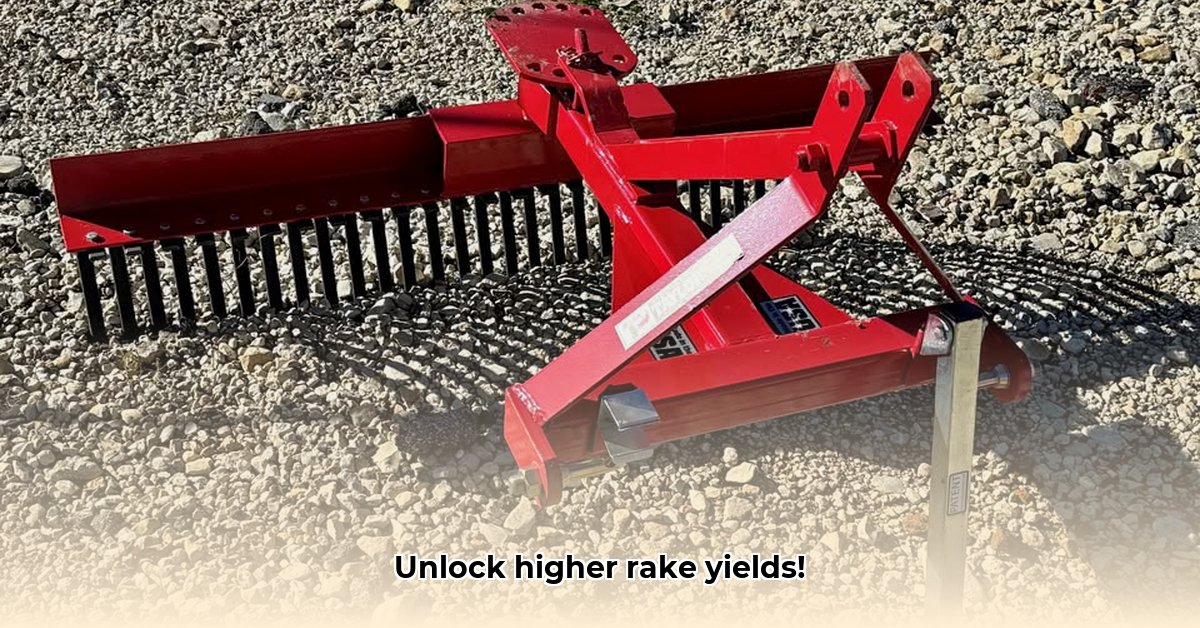
Choosing the right pull-behind rake for your farm is a crucial decision impacting efficiency and sustainability. This guide provides actionable advice for selecting, operating, and maintaining a Tractor Supply pull-behind rake, maximizing your yield while minimizing environmental impact. For more information on tractor implements, check out this helpful resource on tractor implements.
Choosing the Right Rake: A Tailored Approach
Selecting the appropriate rake depends heavily on your land size and intended use. Just as you wouldn't use a small hammer for a large nail, selecting the correct rake ensures optimal efficiency and minimizes soil compaction.
Acreage and Rake Size:
| Acreage | Recommended Rake Type | Tine Type Suggestions | Key Considerations |
|---|---|---|---|
| Under 5 acres | Light-duty, narrow working width | Spring tines (lighter debris) | Maneuverability, gentle soil treatment |
| 5-10 acres | Medium-duty, moderate working width | Rigid or combination tines | Balance between maneuverability and efficiency |
| 10+ acres | Heavy-duty, wide working width | Heavy-duty rigid or combination tines | Maximum efficiency, potentially multiple passes needed |
Tine Type: Spring tines are gentler on soil and ideal for lighter debris; rigid tines are stronger for heavier materials but may compact the soil more. Combination tines offer a balance. Consider your soil and the material you'll be raking. What type of tines best suit your soil and typical raking needs?
Material and Durability: Heavier-duty steel rakes are more expensive but offer greater longevity, reducing the long-term environmental impact of replacements. How does the upfront cost of a durable rake compare to the cost of replacing a less durable one over time?
Tractor Compatibility: Always check your tractor's specifications (weight and power requirements) to ensure compatibility with the chosen rake. Overloading is dangerous and inefficient.
Setting Up and Operating Your Rake: A Safe and Efficient Process
Proper setup and operation are essential for both efficiency and safety.
Hitching: Securely attach the rake to your tractor's three-point hitch, precisely following the manufacturer's instructions. Are all safety pins and hitch mechanisms securely fastened?
Adjustments: Adjust the rake's working depth and angle. Experiment to find optimal settings based on soil conditions and the task. How does adjusting tine depth affect the effectiveness of the rake and soil compaction?
Operation: Begin slowly, increasing speed gradually. Maintain a steady pace for efficient and safe operation. What is the optimal speed for raking different types of material?
Safety: Always wear appropriate safety gear (eye protection, hearing protection). Maintain awareness of your surroundings.
Maintaining Your Rake: Prolonging its Lifespan
Regular maintenance is crucial for maximizing your rake's lifespan and minimizing environmental impact from replacements.
Lubrication: Lubricate moving parts regularly as recommended by the manufacturer.
Cleaning: Remove debris from tines and frame after each use to prevent damage and improve performance.
Inspection: Regularly inspect for damage or wear. Address any issues promptly.
Consult the Manual: Refer to your owner's manual for maintenance, troubleshooting, and repair information. What are common maintenance issues and their solutions?
Environmental Considerations: Responsible Farming Practices
While specific data on the environmental impact of pull-behind rakes is limited, minimizing soil disturbance is key.
Avoid excessive passes: Repeated raking compacts the soil, negatively affecting soil health and overall yield.
Shallow working depth: Adjust the tine depth to minimize soil disruption and promote sustainable soil management.
Responsible debris handling: Consider composting collected debris instead of discarding it.
Cost-Benefit Analysis: Long-Term Investment
Consider the initial cost, maintenance, and fuel consumption. Compare these against employing manual labor or hiring services. The long-term savings from increased efficiency and potential yield improvements often outweigh the initial investment. How does the cost of using a pull-behind rake compare to manual labor costs over time?
Conclusion: Making an Informed Decision
Selecting the right pull-behind rake from Tractor Supply requires careful planning. Prioritize safety, perform regular maintenance, and adopt environmentally conscious practices for efficient and sustainable farming. Your informed choice will ensure a substantial return on investment for years to come.